Equitable Charge Bridging Loans
Specialist short-term property finance for UK investors where a full registered legal charge is not possible or practical. Fast, structured funding built around the exit.
Common use cases: second charge consent refused, urgent capital raises, portfolio restructuring, complex titles and time-sensitive refinances.
Equitable charge bridging loans are short-term property loans secured against a property without registering a full legal charge at HM Land Registry, with the lender instead taking security through contractual and legal documents known as an equitable charge.
They are designed for speed and flexibility where a normal registered charge route is too slow or unavailable - particularly when a second charge bridging loan is not possible because the existing mortgage lender has refused consent.
- Typical term: 3-18 months
- Typical leverage: often around 65%-75% CLTV
- Borrowers: investors, limited companies and SPVs
- Use cases: urgent capital raises, portfolio cases, consent refused and specialist behind-mortgage borrowing
- Key focus: clear exit strategy and legally workable structure
Related products: second charge bridging loans, second charge no valuation bridging loans, commercial bridging loans, commercial no valuation bridging, AVM bridging loans, desktop valuation bridging.
What is an equitable charge bridging loan?
An equitable charge bridging loan is a specialist short-term property finance facility where the lender takes security over the property without registering a full legal mortgage-style charge at HM Land Registry. Instead, the lender’s security is created through contractual and legal documents that give it a claim over the property’s value if the loan is not repaid.
Borrowers commonly use equitable charge bridging when they need to raise capital behind an existing first mortgage but a normal second charge bridging loan is not possible, often because consent has been refused. It can also be relevant for structured investor cases, portfolio borrowers and transactions needing a more specialist legal route than standard bridging.
Can I qualify?
Most equitable charge bridging cases are assessed on security quality, combined leverage, title position, existing mortgage details and exit strength. This section makes the main eligibility questions easier to scan.
These loans are usually more specialist than standard bridging, so lender availability is narrower and legal feasibility matters more. Where the property is investment-led and there is a workable structure, an equitable charge may be a realistic alternative to second charge bridging or, in some cases, commercial bridging loans for more complex assets.
Usually considered
Investment properties, limited companies and SPVs, portfolio borrowers, urgent capital raises, consent-refused cases and borrowers with a clear refinance or sale exit.
Usually more lender-specific
Regulated scenarios, weak exits, highly leveraged structures, complex title issues, specialist assets and cases where the first charge position creates legal obstacles.
| Question | Typical answer | What helps |
|---|---|---|
| Ltd Co / SPV? | Yes | Company docs and directors ready |
| Investment property? | Usually yes | Clear, unregulated use |
| Second charge consent refused? | Often yes | Strong legal route and exit |
| Bad credit? | Sometimes | Lower CLTV and stronger security |
| Portfolio structure? | Often yes | Organised documents and clean title data |
| Regulated borrowing? | Usually no | May suit a different product route |
What will it cost?
Pricing is highly case dependent. Total cost depends on the property, legal structure, CLTV, borrower profile, lender appetite and exit strength.
Because equitable charge bridging is a specialist security structure, it can price higher than standard first charge bridging or some second charge bridging loans. Valuation route can also affect overall cost, with some cases fitting AVM bridging loans or desktop valuation, while others require a full valuation for lender certainty.
Lower CLTV, clean title, straightforward investment property and strong refinance or sale exit. Indicative pricing is case-by-case rather than formulaic.
Standard consent-refused scenarios, portfolio-backed borrowing and investment cases with a clear repayment event.
Weaker exits, more bespoke legal drafting, complex ownership structures, specialist assets and tighter leverage positions usually price higher.
Arrangement fee typically 1.5% to 2%, plus admin, valuation and legal fees. Legal costs can be higher where the security documents are more bespoke.
| Term | Range | What it means |
|---|---|---|
| Leverage | Often ~65%-75% CLTV | Total secured borrowing on the property is assessed rather than just the new loan in isolation. |
| Loan size | Case dependent | Availability depends on property, structure and lender appetite. |
| Term | 3 to 18 months | Should match the refinance, sale or other repayment timeline. |
| Interest type | Retained, rolled or serviced | Structure depends on cash flow, exit timing and lender preference. |
| Arrangement fee | 1.5% to 2% typical | Often added to the facility or deducted on completion. |
How fast?
Speed depends on title clarity, lender appetite, valuation route, solicitor responsiveness and how bespoke the legal structure needs to be.
In the right scenario, equitable charge bridging can move quickly because it is often used specifically where timing matters. It may sit alongside routes such as second charge no valuation bridging loans, no valuation bridging loans, commercial no valuation bridging or high value residential bridging loans depending on the security and urgency.
What’s required?
We have simplified the enquiry path so users can start with a quick qualification form first, then complete a fuller pack once the case is confirmed as viable.
Because equitable charge bridging is more specialist, we need better visibility on the first mortgage, title position and exit than on a standard bridging enquiry. Related routes such as second charge bridging loans, commercial bridging loans, land bridging loans, permitted development finance or regulated bridging loans may also be relevant depending on the circumstances.
Name, phone, email, property address, estimated value and loan purpose. Enough to confirm feasibility and likely lender route.
Loan amount, term, exit, company details, first mortgage balance, lender name, title information and supporting documents.
Current mortgage statement, evidence of consent issue if relevant, security details and a clear explanation of why the funds are needed.
Refinance plan, timing, property background, rental or asset evidence where relevant and broker AIP if available.
Equitable charge bridging loan questions answered
What is an equitable charge bridging loan?
It is a short-term property loan where the lender takes security without registering a full legal charge at HM Land Registry. The security is created through contractual and legal documents instead.
Why would I use this instead of a second charge?
It is commonly used when the first mortgage lender refuses consent for a second charge, or where a registered second charge is too slow or impractical for the transaction.
Is an equitable charge legally binding?
Yes. It is a legally binding security arrangement, although enforcement can be more complex than with a registered legal charge and may require court action.
How quickly can it complete?
Fast cases can move very quickly, sometimes within days, especially where title, valuation route and borrower due diligence are all straightforward.
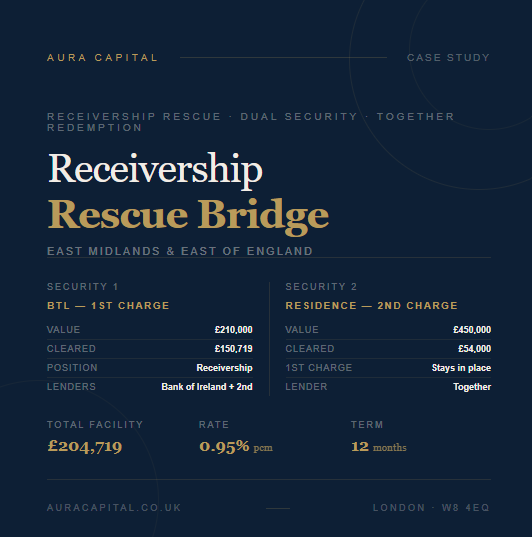
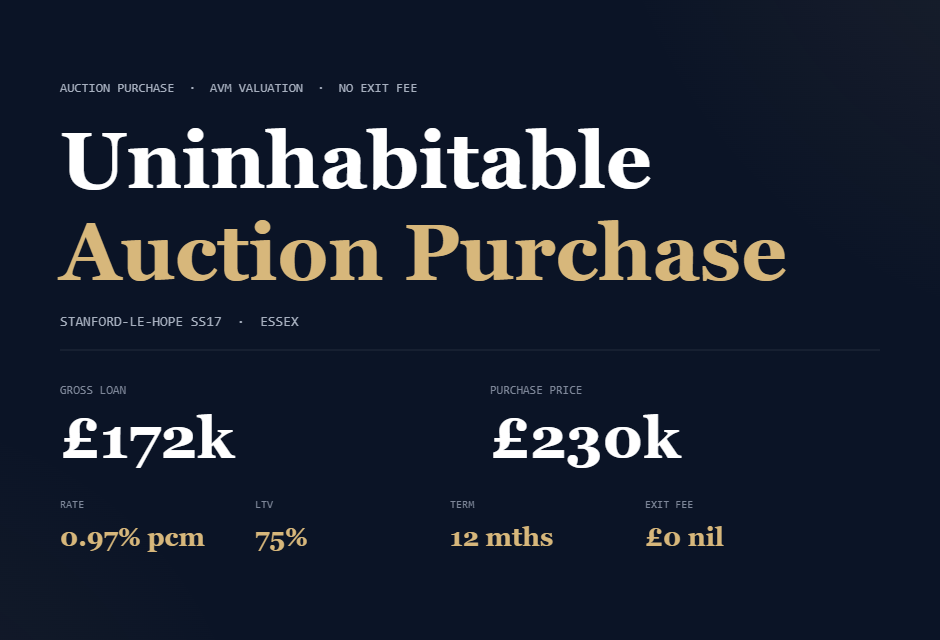
Our Case Studies
Discover how we’ve helped clients secure fast, flexible funding across acquisitions, refinances, and development deals.